Statistics of Families in America That Live Below the Poverty Line
Samuel Stebbins and Thomas C. Frohlich
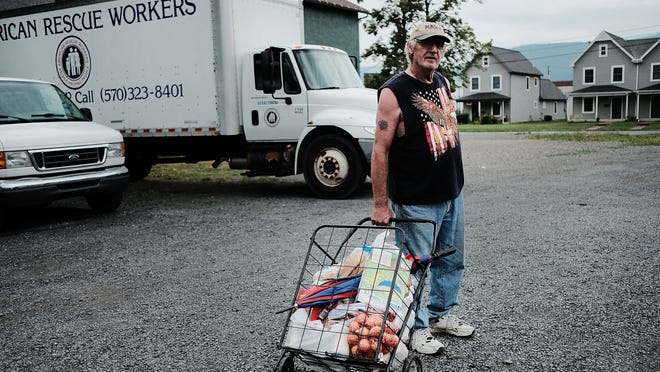
A range of factors affect the likelihood of living in poverty – the poverty threshold in the U.s.a. was defined in 2018 every bit a four-person household earning $25,000 or less. Where and when a person was built-in, their race, their pedagogy level and that of their parents, their age and health, the composition of their family unit, and the status of their relationship are all variables determining poverty status in the The states.
24/seven Wall St. analyzed government poverty statistics for 28 selected population groups from the U.S. Demography Bureau's Current Population Survey (CPS). The list is grouped so each detail lends context to the next. We compared men and women, Hispanic Americans of all races, black Americans, and white Americans, also as full-time, part-time, and unemployed individuals.
We besides compared poverty rates for people living in the Southward, Midwest, West and Northeast parts of the United States.
It is of import to note that poverty levels for certain groups are not broken downwards by the CPS. For instance, American Indian and Alaskan Natives are not on this list.
Selling your stuff for actress greenbacks?:Here are the best ways to do it
Social Security:3 means to increase your benefits for life
Age and sex
Men
• Total group size: 158.7 million people
• Group members living below the poverty line: 16.8 million people
• Group poverty rate: 10.six%
Of the 158.vii 1000000 men in the The states, 16.8 1000000 live below the poverty line, or 10.6% – beneath the eleven.eight% poverty rate across all groups. For a number of reasons, men are more than likely than women to be in the workforce, and less likely to face discrimination related to salary or hiring.
Women
• Full group size: 165.ane million people
• Group members living below the poverty line: 21.4 million people
• Grouping poverty charge per unit: 12.ix%
Women in the U.s. earn, on average, near 85 cents for every dollar men earn. Women are also far more than probable than men to live below the poverty line. Of the 165.1 1000000 women nationwide, 12.9% live below the poverty line, compared to 10.6% of the 158.seven million U.South. men.
Under age xviii
• Total grouping size: 73.3 million people
• Grouping members living below the poverty line: 11.9 million people
• Group poverty charge per unit: xvi.2%
American children are far more than likely to live below the poverty line than adults. Younger children are at an even greater risk of living in poverty, as are children of minority families.
Age 25 and over
• Total group size: 221.five million people
• Grouping members living below the poverty line: 21.nine million people
• Group poverty charge per unit: 9.ix%
About one in every x Americans age 25 or older live below the poverty line. The age range covers broad demographic groups, including those of prime number working historic period besides as those who have retired.
Age 65 and over
• Total group size: 52.8 million people
• Group members living below the poverty line: 5.ane million people
• Group poverty rate: nine.7%
After age 65, many working Americans start transitioning into retirement. Those who have non saved enough or are not enrolled in a pension fund are at especially high risk, and may demand to go on working into their quondam age to stay out of poverty. Equally senior citizens continue to age, the risk of poverty increases, as 11.3% of Americans 75 and older live in poverty compared to 9.7% of those 65 and over.
Region

Northeast
• Total group size: 55.iii million people
• Group members living below the poverty line: 5.seven million people
• Group poverty rate: ten.iii%
The Northeastern U.Southward. – a region extending from New Jersey and Pennsylvania upwardly through New England – has the everyman poverty rate of all 4 Census designated regions. Of all ix states in the Northeast, Pennsylvania has the highest poverty rate, at 11.viii%. New Hampshire has the lowest, at 6.1%
Midwest
• Full group size: 67.five million people
• Group members living below the poverty line: 7.0 1000000 people
• Group poverty rate: x.four%
At that place are 12 states in the Midwest, extending from Ohio down and across to Kansas. Big swaths of the Midwest take been hit especially difficult by the reject of American manufacturing. State poverty rates in the region range from 7.5% in Kansas to 12.4% in neighboring Missouri.
West
• Total group size: 77.6 million people
• Grouping members living below the poverty line: 8.7 million people
• Group poverty charge per unit: 11.2%
The poverty rate amongst the 13 states in the Due west is 11.2%, slightly lower than the 11.8% rate across the U.Southward. as a whole. New Mexico's 16.6% poverty rate is the highest in the region and tertiary highest among states. Meanwhile, Utah, its neighbor to the northwest, has a poverty rate of 6.9%, 2nd everyman among states.
South
• Total group size: 123.v million people
• Group members living below the poverty line: 16.viii million people
• Grouping poverty rate: thirteen.6%
Ameicans in the Due south are more likely to live in poverty than those in any other geographic region. Across the sixteen states that brand up the S, the poverty rate is 13.vi%. The region includes both of the states with the highest poverty rates – Louisiana and Mississippi, which have poverty rates of 19% and 19.six%, respectively.
Educational attainment
Adults without a high school diploma
• Full group size: 22.0 1000000 people
• Grouping members living below the poverty line: 5.vii million people
• Group poverty rate: 25.9%
Education is the best manner to help ensure financial security in the U.s., and American adults who accept not completed high school are at an particularly high risk of living in poverty. More than than one in every four of the 22 million adults age 25 and over who dropped out of high school live beneath the poverty line.

Adults with a high school diploma, no college
• Full group size: 62.3 million people
• Grouping members living beneath the poverty line: seven.9 million people
• Group poverty rate: 12.seven%
Adults for whom the highest level of instruction is loftier school are at a slightly greater than average risk of poverty. Of the 62.iii 1000000 Americans who fit into this demographic, 12.vii% alive in poverty, compared to 11.8% of all Americans.
Adults with some college
• Full group size: 57.iv one thousand thousand people
• Group members living below the poverty line: 4.8 million people
• Group poverty charge per unit: eight.4%
Income tends to rise with educational attainment, and the gamble of poverty tends to fall. Of the 57.iv million Americans with some college education but less than a available's degree, 8.4% live in poverty.
Adults with a bachelor's degree or higher
• Total group size: 79.viii million people
• Group members living below the poverty line: 3.5 1000000 people
• Group poverty rate: 4.iv%
The median weekly wage for working Americans with a bachelor's degree or higher is $i,198, well in a higher place the weekly median of $932 for all workers. Adults with a four-year caste are also far less likely to face serious financial hardship – simply that does non hateful that college-educated adults are immune by any means. At that place are some 3.5 one thousand thousand Americans age 25 and over with a bachelor's degree or higher, or 4.iv% of the demographics, who live below the poverty line.
Family structure
All families
• Total group size: 83.v meg people
• Grouping members living below the poverty line: seven.5 million people
• Group poverty rate: nine%
People living with family members in the The states are less likely than the typical American to live beneath the poverty line. The poverty rate among the 83.5 one thousand thousand Americans living with their family is simply 9%, compared to the 11.8% poverty rate beyond the population as a whole.
Married-couple families
• Full grouping size: 62.0 million people
• Grouping members living below the poverty line: 2.9 million people
• Group poverty rate: 4.7%
Those living in a ii-parent household are far less likely than those in other living situations to alive on poverty level incomes. Married-couple families have a greater range of options related to childcare and employment than unmarried-parent households. Nationwide, some 4.7% of people living in married-couple families live below the poverty line, less than half the 11.viii% poverty charge per unit amongst all Americans.
Single parent households with male head of household
• Total group size: half dozen.five 1000000 people
• Group members living beneath the poverty line: 824,000 people
• Group poverty charge per unit: 12.7%
Unmarried-father households are far less common in the United States than unmarried-female parent households. And only as men are less likely to live in poverty than women, those living in single-male parent households are far less likely to live in poverty than single-mother households. Some 12.7% of Americans in single-parent households headed by a man live in poverty, compared to 24.9% of such households headed by a woman.
Single parent households with female head of household
• Full group size: 15.one meg people
• Group members living below the poverty line: 3.vii meg people
• Group poverty rate: 24.9%
Women are more than likely than men to alive in poverty, and adding dependents into the movie, the poverty rate among women jumps substantially. Nearly ane in every four people living in single-parent households headed by a woman alive below the poverty line, compared to the poverty charge per unit of 12.nine% amidst women alone.
The increased likelihood of financial hardship is due to a number of factors, including that employed mothers are less likely to piece of work total-fourth dimension than employed fathers, and nationwide, women earn an average of 85 cents for every dollar men earn.
Employment status
Worked total-time, year round
• Total group size: 118.0 million people
• Grouping members living below the poverty line: two.6 million people
• Group poverty charge per unit: 2.ii%
The all-time style to avert serious financial hardship is to have a steady source of income. Perchance not surprisingly, the poverty rate among Americans working total-time is merely ii.2%, a fraction of the overall 11.8% poverty rate. All the same, for many working Americans, especially those in low-paying jobs with dependents to support financially, even working 40 hours a week is not enough to stay out of poverty. At that place are some 2.6 million Americans working full-fourth dimension living below the poverty line.
Part-time workers
• Total group size: 49.3 one thousand thousand people
• Group members living below the poverty line: 5.half dozen million people
• Grouping poverty rate: xi.4%
Americans may be working office-time for any number of reasons, including setting aside time to further their education, childcare responsibilities, or difficulty finding a full-time position. Of the 49.3 one thousand thousand Americans working part time, 11.4% live below the poverty line, closely in line with the xi.8% overall poverty rate.
Non working (age 16 and older)
• Total grouping size: 92.2 million people
• Group members living beneath the poverty line: 19.3 million people
• Group poverty rate: 20.9%
In that location were about 92 million Americans age sixteen and over who did non piece of work in 2018. Without a steady income stream, this demographic is particularly susceptible to poverty. Slightly more one in every 5 working-age Americans who did not work last year lived in poverty, nearly double the xi.viii% national poverty rate.
Race and ethnicity
White alone, not hispanic
• Total group size: 194.8 1000000 people
• Grouping members living below the poverty line: 15.7 million people
• Group poverty charge per unit: 8.ane%
Americans who identify as white are the to the lowest degree probable racial group to live below the poverty line. Among the 194.8 million not-Hispanic whites living in the United States, eight.1% alive in poverty, a considerably smaller share than the 11.8% national poverty charge per unit.
Asian alone
• Total group size: 19.8 million people
• Group members living beneath the poverty line: 2.0 million people
• Group poverty rate: 10.1%
Americans of Asian descent are less likely to live in poverty than the typical American but more likely to live in poverty than white Americans. Of the nearly 20 million Americans who identify equally Asian, 10.i% live below the poverty line – below the 11.8% overall poverty rate but higher than the viii.1% rate among white Americans.
Hispanic (any race)
• Total group size: 60.0 million people
• Group members living below the poverty line: 10.5 1000000 people
• Group poverty rate: 17.6%
Hispanic Americans, or those who speak Spanish – ofttimes of Latin American descent – are far more probable than the typical American to live below the poverty line. Of the threescore million Americans who place equally Hispanic, 17.vi% live in poverty, compared to 11.eight% of all Americans.
Black alone
• Full group size: 42.eight million people
• Group members living below the poverty line: 8.nine million people
• Group poverty rate: 20.8%
Black Americans are more than twice as likely to alive below the poverty line as white Americans. More than than one in every five of the 42.8 million Americans who identify as blackness live beneath the poverty line, compared to less than i in every ten white Americans.
In October 2019, the black unemployment rate hit a record low of 5.iv%, which suggests the poverty rate among black Americans could soon autumn as well. Still, black Americans are far more likely to be out of a chore than other groups in the United States, as the national unemployment stands at 3.vi%.
Citizenship status

People born in the The states
• Total group size: 278.i million people
• Group members living below the poverty line: 31.eight meg people
• Grouping poverty rate: 11.four%
People who were born in the U.s.a. are slightly less probable to face serious fiscal hardship than those who live hither but were born abroad. Some 11.4% of native-born Americans alive below the poverty line, slightly beneath the 11.8% poverty rate overall.
All U.Southward. citizens
• Full group size: 300.3 meg people
• Group members living below the poverty line: 34.0 million people
• Group poverty charge per unit: eleven.three%
1 of the strongest predictors of poverty in the United States is citizenship. U.South. citizens – both foreign and native built-in – have access to a far wider range of employment opportunities than non-citizens. The poverty rate among American citizens is xi.3%, below the eleven.viii% poverty rate among everyone living in the Us.
Foreign-born, naturalized citizen
• Full group size: 22.three million people
• Group members living beneath the poverty line: 2.2 meg people
• Group poverty rate: 9.9%
Overall, those who were born outside of the Usa are slightly more than likely to live in poverty than those born in the land. The 1 exception, however, is those who were born away and have naturalized as U.S. citizens. Of the 22.iii million Americans who fit that description, 9.nine% live in poverty compared to the 11.iv% poverty rate among native-born citizens. The requirements to become a naturalized citizen are all-encompassing and may naturally favor those who are more likely to be financially secure.
Foreign-born, not a citizen
• Total grouping size: 23.5 million people
• Group members living below the poverty line: 4.1 million people
• Group poverty rate: 17.5%
The poverty charge per unit among those built-in in a different country and are not U.S. citizens is a staggering 17.5%. Non-U.S. citizens living in the country are often forced to live and work in the shadows, and doing so often ways working at very low paying jobs.
Methodology
Most Americans will fall into at to the lowest degree ane of these categories, while some might fit several. And while some of these categories may not be intuitively associated with poverty, none are immune to poverty.
While college-educated Americans and adults working total-time are far less vulnerable to the prospect of poverty than other groups, millions of people in both of these categories faced poverty in 2018.
Out of the 118 million people working total-fourth dimension year-circular, 2.6 meg, or about 2.ii%, live in poverty. And of the 79.8 1000000 Americans with a bachelor's degree or higher, 3.five million, or approximately iv.4%, earn incomes beneath the poverty level.
While suburban poverty is on the rise, populations earning low incomes remain relatively concentrated in city centers. The Westward and South have college poverty rates, merely there are pockets of extreme poverty in every U.S. region. Poverty is as well highly concentrated in the South, Southwest, and Appalachian regions.
It is important to notation that the official poverty rate is an imperfect measure of what people actually face up – the threshold is the upshot of the 1963 toll of nutritionally adequate food for the yr multiplied by 3, and indexed to aggrandizement. A household's cash income before taxes is compared to that threshold to determine poverty status.
24/seven Wall Street is a USA TODAY content partner offering financial news and commentary. Its content is produced independently of USA TODAY.
Source: https://www.usatoday.com/story/money/2019/11/06/united-states-poverty-rate-for-every-group/40546247/
0 Response to "Statistics of Families in America That Live Below the Poverty Line"
Post a Comment