How this Singapore entrepreneur is creating stylish, sustainable homeware
Advertisement
People
How this Singapore entrepreneur is creating stylish, sustainable homeware
Colin Chen, the human behind craftsmen collective The General Co in Jalan Besar, is on a quest to craft stylish homeware with longer lifespans, in an endeavor to provide an alternative to plastics and ceramics.
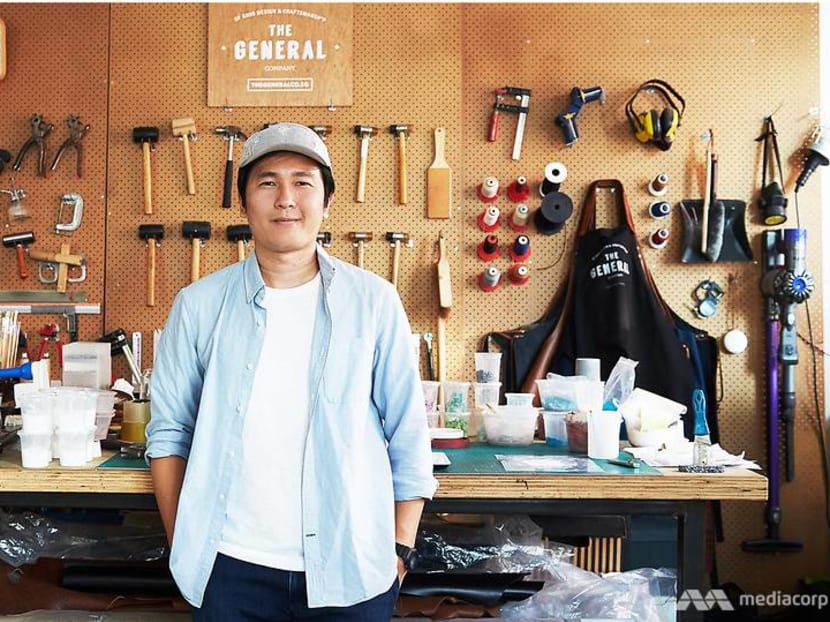
Colin Chen, the man behind craftsmen collective The Full general Co in Jalan Besar. (Photograph: Kelvin Chia)
13 Jan 2022 06:30AM (Updated: 21 May 2022 02:27PM)
Equally a restaurateur, Colin Chen finds it hard to resist the allure of a beautiful piece of dinnerware. When he encounters such creations on his travels, he purchases them for The Refinery, his modernistic yakitori restaurant in Jalan Besar. But after a fortnight, he sometimes returns to notice pieces damaged by devil-may-care handling.
"The whole product is still beautiful. Ninety-nine per cent of it is still intact. It's merely that tiny picayune fleck that's flawed, but we have to shop or dispose of that piece as we don't want diners to cutting themselves while eating," said Chen.
Frustrated past the growing pile of plates made obsolete by tiny imperfections, Chen set out to create pieces that could be easily restored. Turning away from more fragile mediums such as ceramic or porcelain, the 37-yr-old began experimenting with a durable form of eco resin known equally Jesmonite. The acrylic-modified gypsum blended is a water-based cloth, making it more environmentally friendly than a typical solvent-based acrylic.
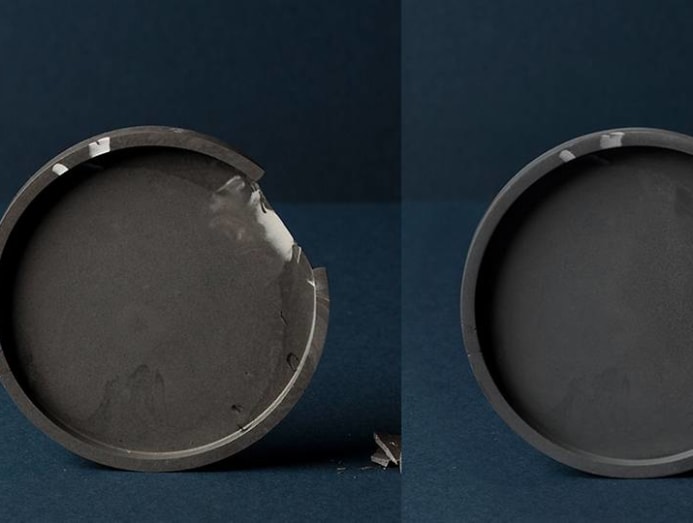
To create a plate, Chen begins by mixing the eco resin solution with colour pigments. The solution is then poured into a silicone mould and left to cure. Afterwards it is sanded down past hand, it is finished with a clear, protective blanket. "We tin can make this within a day," said Chen, equally he holds up a plate, letting this reporter run her fingers across it. The end product is smoothen and cool to the bear on, with a tactile quality approximating that of stoneware.
When eco resin dinnerware is chipped or broken, Chen simply recasts the fragments, along with new eco resin material, into the original mould. Drawing a parallel to kintsugi, a Japanese method of repairing broken ceramics using powdered metals mixed with water and lacquer, Chen believes that this medium and method of production is a style to extend the longevity of a product.
"A lot of times, people buy an object, and at the end of its life, its value drops to zero. Nosotros want to create a loop where people can once more find value in the things they own."
"A lot of times, people buy an object, and at the end of its life, its value drops to zero. We desire to create a loop where people tin again observe value in the things they own." – Colin Chen
His methods appear to run counterintuitive to conventional business sense. Any savvy retailer stands to profit from a customer returning to buy multiple appurtenances, not ane who makes a one-fourth dimension buy. But Chen's attempt to blunt throwaway culture comes at a time where consumers are purchasing carbon offsets for intercontinental flights, eschewing plastic straws, and swearing off meat in the proper name of climatic change.
READ> Looking dorsum at the 2010s: How the luxury industry embraced sustainability
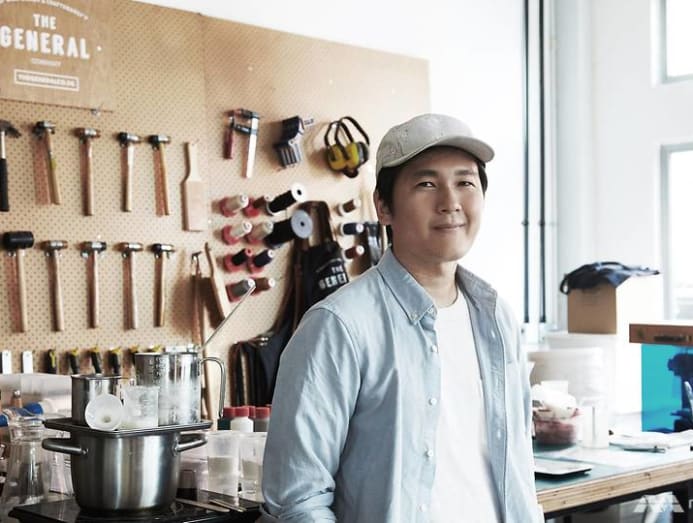
How timely and so, that his eco-friendly wares hitting the market late last year. After months of toiling in a workshop no bigger than a security guardhouse, Chen finally launched his commencement batch of plates, along with an assortment of tableware and homeware, at the Nov 2022 edition of Bazaar Fairs Singapore.
Sold under a brand called Grams, customers lapped upward over a 100 pieces and placed orders for more than. The notion of sustainable homeware, information technology seems, had just as strong an appeal as a collection mirroring the leading design aesthetic of our time – round coasters in millennial pink, planters boasting a terrazzo pattern, and plates featuring monochromatic swirls.
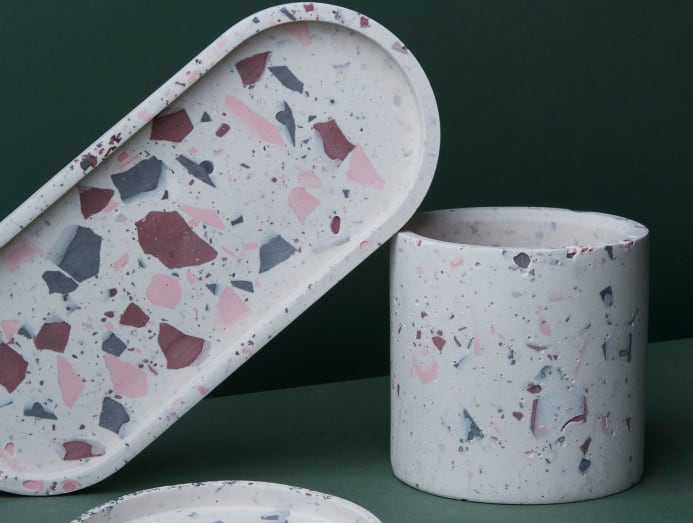
With pocket-sized circular dishes going at Due south$24 and larger trays priced from Due south$78, Grams might be more expensive than Ikea, simply still more affordable than an object of desire from Danish design company Hay.
In many ways, Grams' sustainability-driven ethos is a culmination of Chen's decade-long journey as a serial entrepreneur, one he embarked on while still studying at the National University of Singapore's Business School.
Afterward saving up for his first Apple tree 12-inch PowerBook G4, he realised it didn't come with a example. Instead of paying for expensive laptop cases, he cut and sewed his ain under the guidance of his female parent, a traditional dressmaker. He went on to create an array electronic device coverings, selling them under a brand dubbed Made past Fabrix.
"While working on Fabrix, I concluded up with and so much excess fabric – and that's just from a minor production standpoint," said Chen. "I tried to recycle materials by making them into smaller products, but even and so, we still had surplus textile."
In 2011, when he founded The General Co, a collective that grooms and promotes local craftsmen, he encountered even more waste matter generated in the process of production. This time around, it wasn't mere material, only leftover scraps of fine leather.
Chen, himself trained as a leather artisan, hopes to utilise Grams every bit a vessel for upcycling surplus material lying around the workshop.
"Traditional ateliers that produce for luxury brands end up with a lot of [leather] off-cuts. So they use these off-cuts to produce alternative pieces similar pocketbook charms. That's the vision – that we can apply the excess materials we find across my businesses and put it back into objects for Grams," shared Chen, citing a tray fitted with leather handles as a possibility.
Other ideas are more than radical. "Through their woodwork, [carpenters] Roger & Sons ends upwardly with a lot of sawdust. We've been experimenting with an eco resin and sawdust composition," said Chen. Similarly, recycled coffee grounds tin as well be incorporated into resin to derive different colours and textures.
The possibilities are endless. But for Chen, Grams is above all a vehicle for a larger conversation on sustainable consumption. "When given a choice to recycle, nigh people would, just the products that we come across oft serve a single purpose. When that purpose has passed, you realise you have no demand for the object," said Chen.
To this cease, he is happy to have customers return the product so he can crush it down and incorporate the material in hereafter collections, or trade in one Grams items for another (top-up fees apply). "The idea of this whole circular economic system is that we tin can all concur on to something we value. The object tin be passed back to the maker or passed on to someone else who can derive value from it."
"Traditional ateliers that produce for luxury brands terminate up with a lot of [leather] off-cuts. So they use these off-cuts to produce alternative pieces similar bag charms. That's the vision – that nosotros tin apply the excess materials we notice across my businesses and put it back into objects for Grams." – Colin Chen
WATCH> A very rare visit to the Hermes workshop turning scrap into whimsical treasure

Recent Searches
Trending Topics
Source: https://cnalifestyle.channelnewsasia.com/people/sustainable-homeware-made-in-singapore-177106
0 Response to "How this Singapore entrepreneur is creating stylish, sustainable homeware"
Post a Comment